Goalbook allows us to reach every teacher, and we wouldn’t have been able to do that in any other way.
Mary McCarvel-O’Connor, Director of the Office of Specially Designed Services
The Special Education Program in the North Dakota Department of Public Instruction (NDPPI) was looking to make a statewide system change that would be sustainable and help address the special educator shortage. What began as a search for a solution to the educator shortage evolved into a true partnership with Goalbook that addresses the root cause of the problem: instructional practice.
Under the leadership of Mary McCarvel-O’Connor, Director of the Office of Specially Designed Services, state and district leaders now have a greater capacity to support their staff. In turn, educators feel deeply supported and are writing higher-quality IEPs. These IEPs now feature data-driven present levels statements and standards-aligned goals, enabling teachers to accurately assess student growth.
Barriers to Achieving Sustainable, Statewide Changes
Upon monitoring IEPs from across the state, Mary and the state leadership team realized there were systemic challenges in instructional practice. Specifically, IEPs lacked data-driven present levels, and student goals did not align with state standards, nor were they measurable.
A primary root cause of these instructional challenges was a severe, statewide shortage of special educators. As the state and districts struggled to recruit and retain personnel, North Dakota lowered the certification requirements to become a special education teacher, allowing individuals to teach with alternative certification.
While lowering the requirements placed teachers in classrooms, it did not adequately train them in the complex special education process. As a result, newer teachers often lacked the foundational knowledge that special educators traditionally held in the past.
Compounding the issue, the state Office of Specially Designed Services is run by a lean team that lacked the human capacity to ideally serve and support districts across a large, rural state. This administrative strain made it highly challenging to provide the meaningful, sustainable support and professional development required to achieve systemic changes in instructional practice.
The Gaps in Instructional Practice
Without an understanding of how individual elements of an IEP fit together or the core principles of Specially Designed Instruction (SDI), the minimally trained educators frequently grew overwhelmed. Educators turned to unverified online resources for IEP writing.
This led to educators copying and pasting generic goals with “nothing original for an individual student,” noted Danica Nelson, Student Support Services Director for Bismarck Public Schools.
Dan Juve, Upper Valley Special Education Director, observed stagnant, repetitive goals that failed to drive student progress: “We’d see the same goal written for two or three years. You’d read a goal and wouldn’t even know how to measure it. If you can’t come up with a way to collect data, then it’s not a very well-written goal.”
At the state level, Director of the Office of Specially Designed Services Mary shared that they “were seeing present levels that didn’t have data in them. Goals weren’t always tied to the state standards and weren’t always measurable. People had a hard time doing progress reports before we defined specially designed instruction because that was a huge part of all this.”
Because these goals were so generic, educators inevitably floundered when it came to data collection and progress monitoring. “You’d get these beautifully written, long progress reports that really didn’t say anything,” explained Heidi Budeau, Special Education Director for James River Special Education Cooperative. “Then you would have present levels that sounded wonderful, but you still didn’t know what the student’s reading level was, nor if they were making gains.”
Compounding these instructional practice struggles was geography. The vast physical distance between small, rural districts across North Dakota made it difficult for state and Special Education Unit Directors to physically reach all school sites and provide effective support to special education teachers.
Across every tier, the intent was pure. State leaders, unit directors, and educators cared deeply, but they were trapped in a cycle where they lacked the hours, the human capacity, and the specific tools required to get back to the instructional practice basics.
Following a series of state monitoring and seeing educators struggle, Mary knew it was time to invest in a holistic solution—one that would address systemic statewide challenges in instructional practice while simultaneously lifting the burden from Special Education Unit Directors and teachers alike.
“In our whole journey, we were looking for something to help retain teachers. That’s when we found Goalbook,” said Mary.
To address key initiatives in IEP quality, special educator retention, and substantive compliance, North Dakota partnered with Goalbook. This partnership marked the beginning of a coordinated, statewide implementation designed to fundamentally reshape instructional support statewide.
Implementing Goalbook Toolkit’s Holistic Solution Statewide
Goalbook Toolkit is a holistic, research-based solution that builds educator capacity to develop cohesive, high-quality IEPs and implement them with more effective specially designed instruction. Goalbook’s approach blends technology with comprehensive professional development and services to support North Dakota in developing their educators’ instructional practice.
Goalbook’s Customer Success Managers worked closely with the NDPPI to thoroughly understand the state’s priorities and needs. The resulting statewide rollout was seamless. “Goalbook’s rollout was easy. They took the planning and coordinating off our plate,” said Mary.
“I’ve worked with other contractors,” Mary added. “A lot of the time, you have to babysit them to make sure they’re getting their stuff done. Goalbook actually does what they say they’re going to do.”
This targeted support extended even into specialized areas. Dr. Lacey Long, Programs Coordinator for NDPPI, works closely with educators who teach low-incidence populations. She noted how closely she collaborated with Goalbook’s Customer Success team. “We designed specialized training for both the School for the Blind and the School for the Deaf,” said Dr. Long. “It felt really special that it was so targeted and focused, because low-incidence populations are sometimes misunderstood or overlooked.”
Special Education Unit Directors across the state experienced a similar level of responsiveness. Goalbook’s Customer Success Managers communicated directly with them to learn about the unique contexts of their regions and drive localized buy-in. By listening to true regional challenges, Goalbook was able to deliver customized professional development that met district leaders exactly where they were.
Rather than functioning as a standard vendor, Goalbook prioritized ongoing feedback and true problem-solving collaboration. The resulting systemic shift quickly became evident across all levels of leadership.
Outcomes of Implementing Goalbook Toolkit
As a holistic solution, Goalbook Toolkit has proved transformative in improving statewide consistency and alignment.
North Dakota special education leaders now have a scalable lever that complements, amplifies, and fills the gaps in local instructional practices. Today, the value of this implementation extends to every stakeholder, delivering meaningful impact for classroom teachers, district units, and state leadership alike.
Relief for State Leaders
During weekly staff meetings at the state level, Goalbook Toolkit frequently comes up as a reliable lever to solve systemic challenges.
Goalbook’s holistic solution has allowed the NDDPI Office of Specially Designed Services to support Special Education Unit Directors with focused professional learning in ways that were previously impossible due to capacity constraints.
For example, Goalbook facilitated “problems of practice” sessions during the state’s annual Leadership Institute. This targeted engagement lifted a burden by allowing state and district leaders to think more critically about common issues they experience in their districts across the state, collaborate with their peers, and create meaningful solutions to drive results for educators and students.
In addition to amplifying the state’s support of district leadership, Goalbook has expanded the state’s capacity to serve educators. The state leaders now view Goalbook as an always-available, job-embedded resource that guides teachers in real time as they develop and implement IEPs.
“It gives teachers a better direction of where they’re supposed to go,” said Mary. “It helps to align instruction to our standards, and teachers truly understand what they need to do with an IEP.”
Director-Level Outcomes
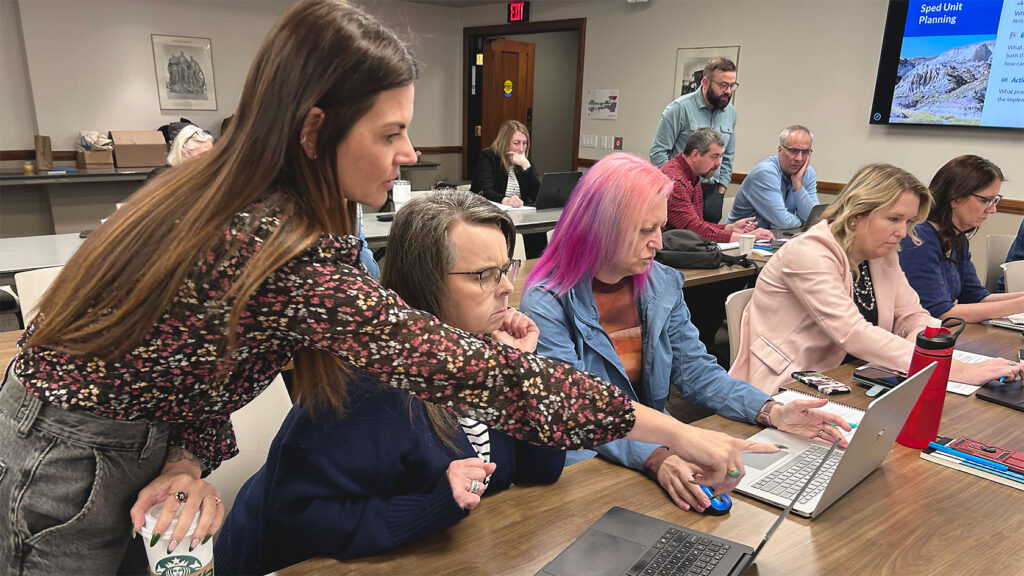
Directors across North Dakota have integrated Goalbook Toolkit directly into their localized professional development days.
Before partnering with Goalbook, directors spent a disproportionate amount of time going back to the basics of explaining all the components of an IEP. Goalbook has freed up their time by acting as a continuous job-embedded professional development resource.
“I think Goalbook honestly takes some pressure off of us in terms of what we are going to do for professional development,” noted Heidi Budeau, Special Education Director for James River Special Education Cooperative. “It actually gives teachers hands-on, practical learning—something that they can use as a resource that helps them be successful.”
Danica Nelson, Student Support Services Director for Bismarck Public Schools, agreed: “I often refer to Goalbook as your personalized instructional coach. Wherever you have access to a computer, you have access to that instructional coach. Helping people view it from that angle is going to help them grow in the profession and dive into practical strategies. It helps teachers be clear about why they are using a particular strategy with a goal.”
For special education unit directors who have long felt overwhelmed and unheard in seeking support for the challenges they faced in recruiting, supporting, and retaining special educators, a statewide implementation of Goalbook Toolkit increased their capacity and effectiveness.
“Directors feel like they’ve been heard now,” Director of the Office of Specially Designed Services Mary shared. “They love Goalbook Toolkit.”
Improved Instructional Practices and Increased Educator Effectiveness
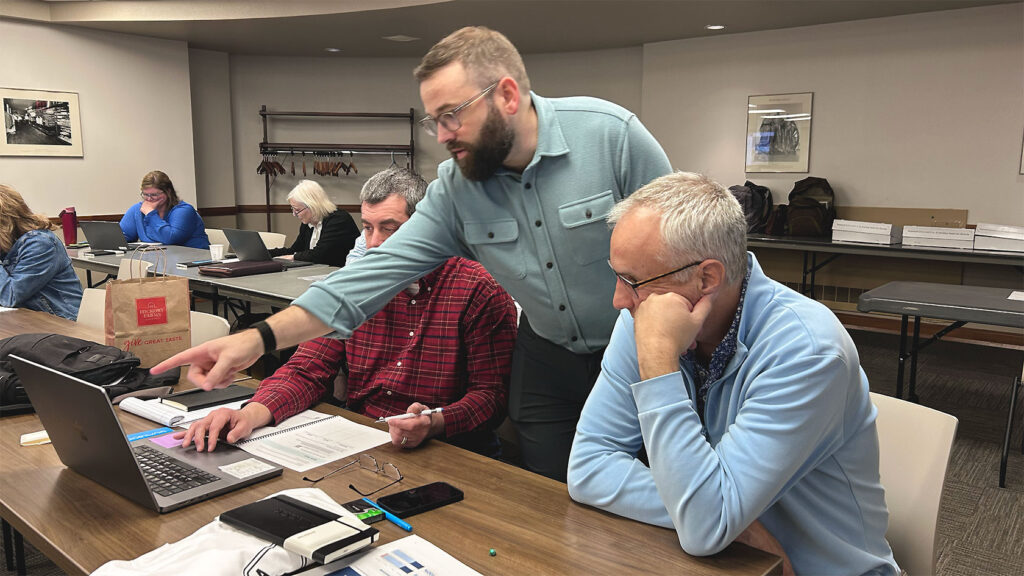
Both novice and veteran teachers across the state have demonstrated a marked increase in effectiveness and understanding IEP cohesiveness:
- Present Levels: Present level statements are data-driven and feature robust, quality student impact statements
- Goals: With data-driven present levels, goals are now individualized, standards-aligned, and specifically measurable
- Accelerated Student Progress: Since goals are now measurable, educators can more accurately monitor student progress. Students are making progress and mastering their goals more quickly than before, and teams have the data to show it.
With a deepened understanding of the full IEP process, educator confidence has strengthened. Teachers are relying more on the knowledge they’ve gained through using Goalbook Toolkit.
This professional confidence is clear during IEP meetings. Teachers now enter meetings bringing very specific data with concrete examples and work the student has done.
“The confidence in teachers who utilize Goalbook is so much stronger in meetings,” said Dan Juve, Upper Valley Special Education Director. “Teachers know what they’re talking about, and it makes the IEP meeting more of a conversation instead of solely reading the paperwork word for word. They can explain student progress better.”
Karla Magnuson, Assistant Director with Wilmac Special Education Unit, has noticed a corresponding cultural shift among families: “When you sit at a meeting and talk to a parent about the fact that their child has met one or two goals, it does have an impact on parents, too. They’re leaving a meeting feeling good and seeing some success, whereas that hasn’t always been the case before.”
Finally, Goalbook Toolkit is bridging the gap between special and general education peers. Special education teachers are using Goalbook Toolkit to articulate the impact a disability will have on a student and what specific needs they have.
“We really want kids to be in the general education classroom 80% or more of the time,” Mary emphasized. “So anytime we can actually give general education teachers more to understand a student, it’s greatly impactful.”
A Return Worth the Investment
Ultimately, partnering with Goalbook has proven to be a deeply valuable investment for North Dakota. By offering a holistic solution, Goalbook has expanded the capacity of both state and district special education leaders while simultaneously elevating the instructional practices of educators.
The elevated instructional practice translates directly into a sense of empowerment. “I feel more supported and confident in my job,” noted Programs Coordinator Dr. Lacey Long.
Educational research consistently demonstrates that this sense of teacher efficacy—the belief that one has the tools and support to make a difference—is a primary driver of career longevity. When educators feel confident in their abilities, they are more likely to be motivated to continue their work.
That confidence is what contributes to the state’s broader goals for teacher retention. “Naturally, no matter where you got your teaching license, when you start a new position anywhere, there is going to be a transition,” explained Allison Miller, Special Education Regional Coordinator for the Office of Specially Designed Services. “Goalbook is a part of the retention piece. If we can better retain our teachers, all the beautiful things fall in line for student outcomes to happen.”
The North Dakota Department of Public Instruction Office of Specially Designed Services originally sought out Goalbook as a targeted solution to retain special educators. What they found was a collaborator who continuously helped them achieve their benchmarks.
To Mary McCarvel-O’Connor, Director of the Office of Specially Designed Services, the truest return on investment has been how reliably the state’s implementation goals are realized.
“We keep setting goals every year,” said Mary, “and Goalbook always meets and exceeds them.”
This shared success is rooted in a culture that goes far beyond a typical vendor relationship. As Mary reflected: “We contract with Goalbook, but it’s not just that. It’s a partnership.”
Improve instructional practice & standards-aligned IEP goals in your district.
Request a Quote