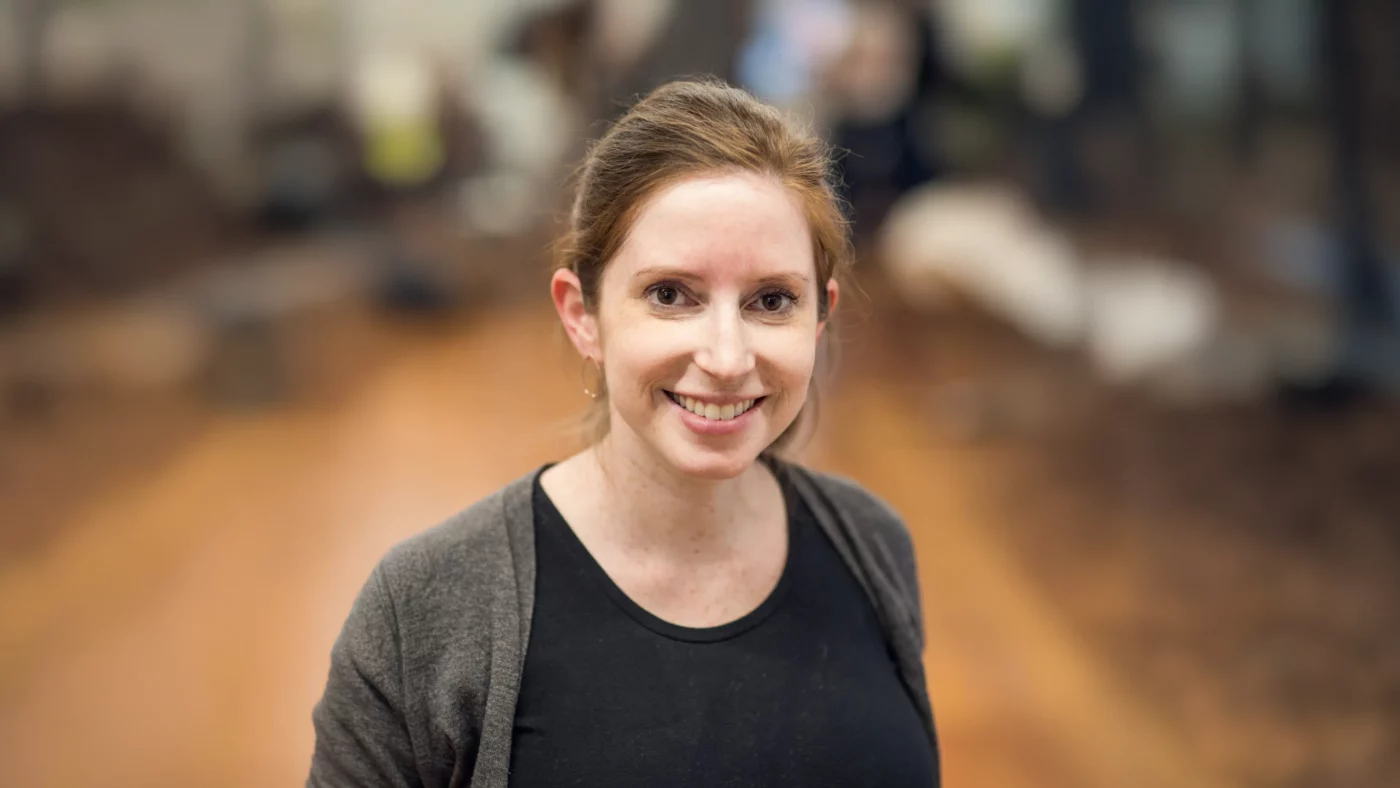

There was a time in her teaching career, six years in, when Luisa Sparrow considered hanging it all up.
She’d been teaching since she graduated from college, 5th grade and middle school science. By then, she was relying too much on her role as an educator to find personal fulfillment.
But the thing about relying on a job to bring fulfillment is that it doesn’t last, which Luisa learned the hard way.
She burnt out.
“I did the right thing, and took a break from teaching,” Luisa said. “I left the classroom. I needed to.”
She went to work for Teach For America, starting up their Delaware office and region with three other people. Luisa also coached the corps members, first and second-year teachers, in their classrooms. “And every time I would visit classrooms, I would think to myself, ‘I wish I could try this with my students,’” she said. “I just kept wishing to have my own students again.”
During her previous teaching experience in a science classroom, Luisa noticed the main challenge for her students was literacy and being able to access a science text. If she read the text aloud or explained a concept to them, they understood. But reading the text themselves was very difficult. After talking to other friends who are teachers, they confirmed the hunch Luisa had: literacy is an area that can make or break student success, no matter the content area.
“So I studied Language and Literacy at Harvard Graduate School of Education,” said Luisa. “I really wanted to learn how to be a better reading teacher.”
It was in graduate school that she took an elective course called “Implementing Inclusive Education.” Dr. Tom Hehir, a leading expert in special education who has since passed away, taught about Universal Design for Learning (UDL). Despite never hearing about UDL before, Luisa recognized that she had unintentionally started to incorporate UDL when she taught science: “To prepare students for the state standardized assessment, I partnered with a fellow teacher, who taught a self-contained special education class, on incorporating more visuals and hands-on activities. All of the students started catching on. This shift was helping all students understand better.” Without knowing the official name for it, Luisa had accounted for learner variability.
“It’s just a stronger design that meets the needs of a much broader range of students. All students benefit from different approaches and flexible learning environments.”
Hearing Dr. Hehir teach about the theory of UDL, combined with her prior practice, caused something to click for Luisa. It was this course that convinced her to switch to special education.
After three years away from the classroom, Luisa listened to the voice inside that kept nudging her to go back. This time, however, she taught in an inclusion setting, working with students with higher incidence disabilities, such as dyslexia. From there, she moved to her current role, working with 5th- and 6th-grade students with moderate to significant intellectual disabilities.
Destined for the Classroom
Despite Luisa’s brief break from teaching, her career in the field seemed to be destined since she was young. It was pretending to teach her younger sister how to read that initially whet her appetite. Throughout high school, she loved explaining concepts to friends and classmates in different classes. It was just something she was naturally drawn to.
During undergrad, when she was a junior, she was in a program that would lead to a traditional teacher preparation program; however, the program requirements changed. She would have to stay an extra year to complete her certification, but she didn’t want to. After researching different avenues, Luisa discovered Teach For America and learned she could get her certification through the program. And that is how Luisa got into teaching. “And I really loved it.”
To this day, Luisa continues to love teaching. The number one thing she loves about teaching? The kids. “They’re always the best part.”
She also loves the daily routine. “It’s not like things suddenly come up out of the blue, but it’s always different, too. Even if you’re teaching the same lesson you taught another year, you have a different group of students, so you’re discussing it in different ways, doing different activities. The students are having different aha moments and realizations. It’s never boring.”
That aha moment from a student drives Luisa in her work year after year. Since her return to the classroom, she’s been teaching special education for 13 years.
Presuming Competence
Behind her work with students is Luisa’s guiding belief: presume competence. “Everyone is capable of learning, thinking, connecting, and understanding.”
Communication is connection, and it allows us to understand and be understood by the world around us.
Her top priority is meeting her students’ academic needs. A foundational goal she has for her students is literacy skill development. First, they work on listening and speaking. “Communication is connection, and it allows us to understand and be understood by the world around us,” said Luisa. Then, they work on reading and writing.
All of the students in Luisa’s classroom are working on modified curricula, so the grade-level standards are adjusted according to their needs. However, Luisa is adamant in saying that even in this framework, all students deserve access to grade-level standards. She shared a specific example to illustrate what this looks like in her classroom.
In the general education classroom, students read The Wild Robot by Peter Brown. They read the book independently, answer questions about the text, and end with a culminating essay.
“In my class, we also read The Wild Robot. I read the book aloud to my students. When we discuss the book, some students respond in full paragraphs, and some respond using gestures or vocalizations,” said Luisa.
Everyone is engaging with the text, but some are accessing it visually and decoding it themselves, while others are accessing it as an audiobook. “Going back to UDL, we see multiple means of representation and multiple means of expression and action.”
When she first began teaching a multi-grade classroom, it was “a bit overwhelming” for her. Now she sees it as a huge benefit. She can group students of different ages and grades according to their strengths and needs. “It’s not about their chronological age; it’s about addressing what skills are the most important for the students at any given time.”
Learning Beyond the Four Walls
For ten years, Luisa has been working with the same paraprofessional, Cindy Ferris. Cindy has been working as a paraprofessional in special education for over 30 years. “I could not do my job without her,” Luisa said.
Together, Luisa and Cindy organize field trips for their students, typically doing two to three a month. They prioritize these field trips for many reasons.
Being that their students have significant disabilities, it takes them a little bit longer to learn things. An intellectual disability is specifically one that affects the acquisition of academic skills as well as daily functional skills. Somebody who does not have an intellectual disability might need to ride the city bus or public transportation, like the T in Boston, only a handful of times to pick up on how to navigate the system and transportation. Somebody with an intellectual disability, however, would typically need a lot more opportunities to practice that.
This is where the field trips come in. Since the school has a bus stop right behind it, the class is able to hop on and take the bus or transfer to the T, if necessary. The students practice the functional skills of navigating public transportation. In addition, the students experience and learn about all the amazing sites Boston has to offer.
Because the school is located in South Boston, the class can easily walk to neighborhood places like the grocery store, library, and Castle Island.
“It’s important for the community to see students like mine capable of navigating the community,” stated Luisa.
Independence and the Autonomy of a Paycheck
About five years ago, Luisa created an inclusive cooking club at their school. Every other week, her class gets together with a general education class to cook a different recipe.
The recipes are visual: each step has a photo to illustrate the step, so everybody is equally able to access the recipe. It means that the students who are in general education and stronger readers aren’t telling the students in Luisa’s class what to do. “Everyone can lead equally,” she said.
The cooking club creates inclusive opportunities for everyone in the school. It also gives students an opportunity to connect with each other socially. When you have social bonds and relationships built, “it’s a lot easier to build inclusive academic opportunities because students have to feel safe if they’re going to take academic risks.”
A lesson Luisa’s learned as a special education teacher is that students need opportunities to share their work with an audience other than her.
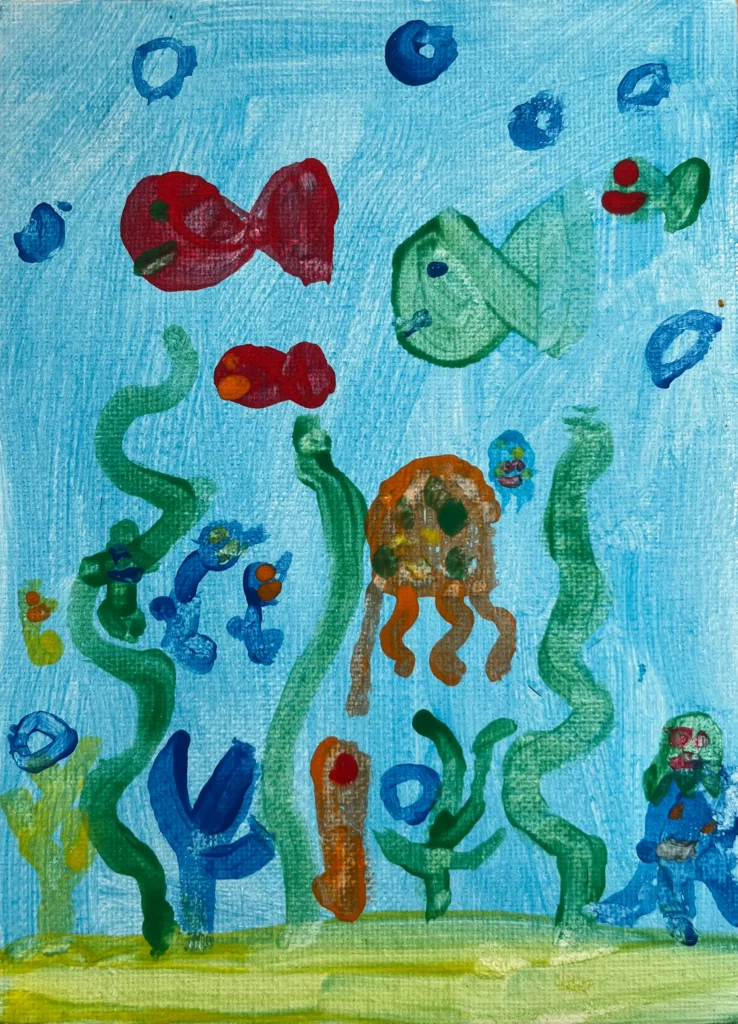
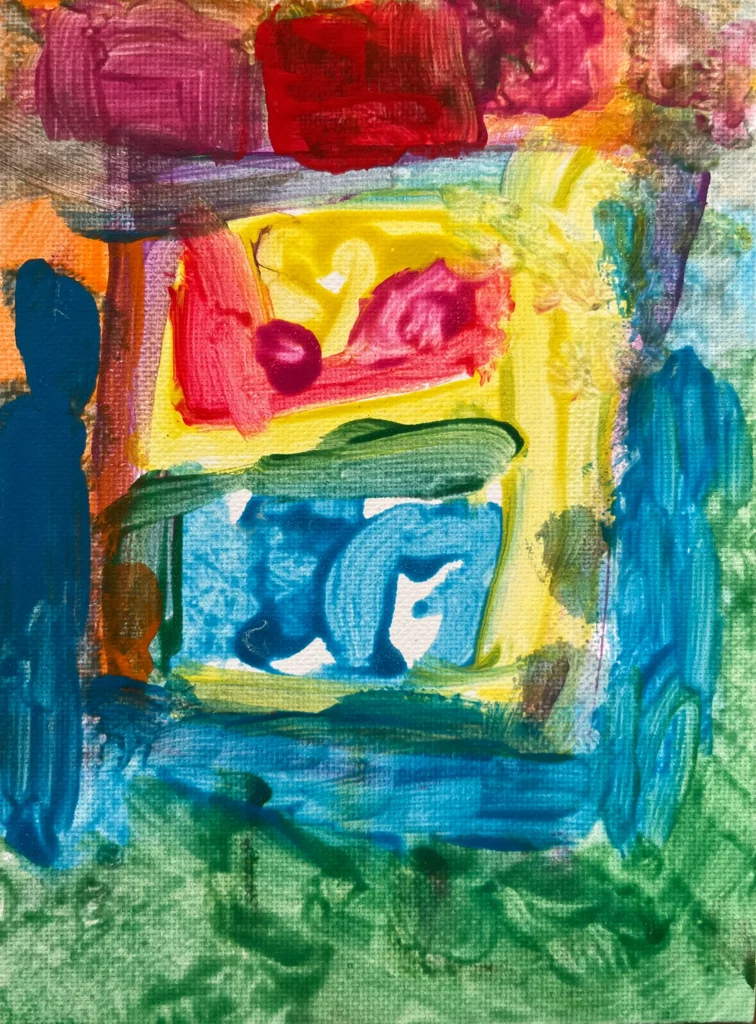
Every year, her students design greeting cards. They paint the designs and name them, too.
They work with a local business that prints them, then the students sell them. When they get an order, the students package the cards up, walk to the post office, and mail them.
The students get to use the money they earn to buy whatever they want to. This point is critical to Luisa: “The power of earning money and having the autonomy over how you spend the money is an important experience for everyone to have.”
“I still remember what I bought with my first-ever paycheck. I bought a boombox, which at the time was very new technology. It had a CD player in it, not just a tape player. It was amazing, and I was so proud,” she recalled.
According to a survey commissioned by Special Olympics, only 44% of adults with intellectual disabilities aged 21–64 are in the labor force. The unemployment rate for adults with intellectual disabilities is 21%. And 28% of working-age adults with intellectual disabilities have never held a job.
“It does not have to be this way,” said Luisa. “But since it is this way, there are so many people with intellectual disabilities who don’t get the opportunity to choose how they spend their money. I want my students to have the experience of earning money from a younger age so they know what it’s like.”


Dignity is the worth and value that we all are born with. You don’t have to earn it. Everybody has it. It’s completely separate from what you can do or produce; it’s just about who you are.
Inclusion as Human Dignity
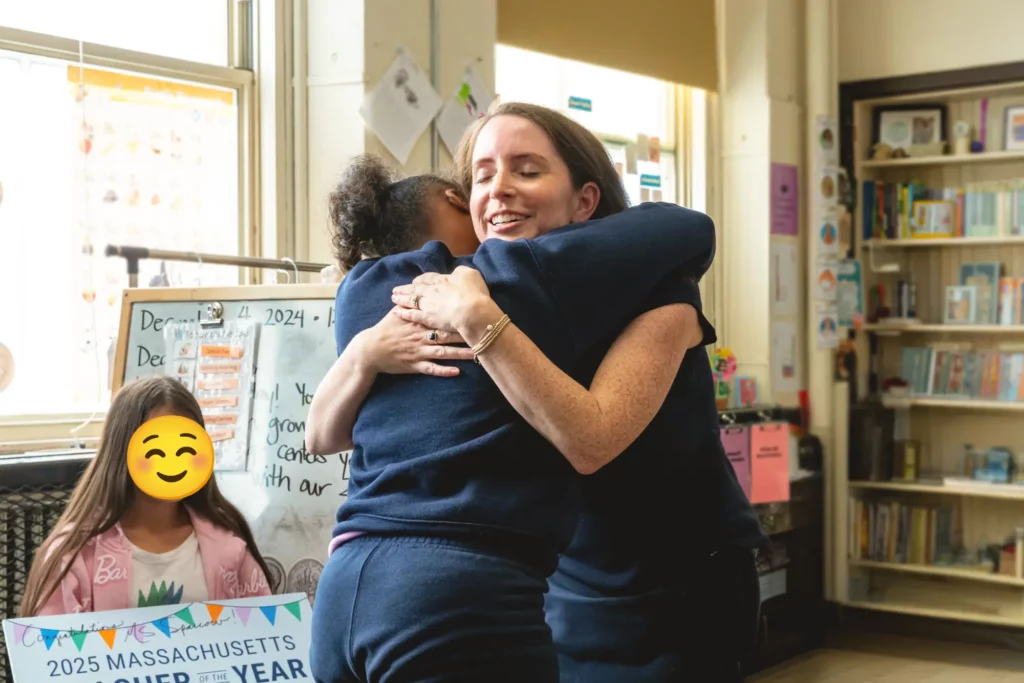
In December 2024, Luisa was named Massachusetts Teacher of the Year 2025. “We don’t talk about it much in my classroom,” she said. “We have so many other things we need to do!”
However, the honor is important to Luisa as a special education teacher, “particularly since I work with students with low-incidence disabilities. It gives me an opportunity to share a perspective that is not always heard or included.”
For Luisa, inclusion means everyone feels a sense of belonging, and everyone’s dignity is respected. “Dignity is the worth and value that we all are born with. You don’t have to earn it. Everybody has it. It’s completely separate from what you can do or produce; it’s just about who you are.”
In a truly inclusive space, people are not going to be doing things the same way, “and that’s honestly desirable. If everybody did everything the same way forever, we would never have progress. We would never have change. Our species would not survive. We need kids to grow up understanding this so they can become adults who understand this because we need leaders who understand this,” said Luisa.
Thus, if there are students who are not making behavior choices that lead to classroom success, Luisa encourages educators to “be curious about what the student is trying to communicate. It’s a natural human desire to be successful. So if a student is behaving in a way that isn’t allowing them to be successful in the classroom, be curious about why.”
“Never forget that all kids are good kids. Behavior is communication.”
The Fundamental Right to Literacy
The state of Massachusetts is top in the National Assessment of Educational Progress (NAEP) scores. Yet “we need to acknowledge that over half of our students are not reading on grade level. This is especially true for our students of color and our students with disabilities,” said Luisa. “I hope to see a time when ALL of our students are having these kinds of results.”
To be named Teacher of the Year 2025 in a high-performing state like Massachusetts speaks to the caliber of Luisa’s teaching practice.
However, the title is not the primary motivating factor for her work. When asked what she’s most proud of achieving in her classroom or school community, she doesn’t say being Teacher of the Year. What she does say is:
“Teaching students to read. Literacy is a fundamental right, and everyone deserves access to strong literacy instruction.”
By shifting her focus from her own fulfillment to the fundamental rights and inherent dignity of her students, Luisa Sparrow didn’t just find a reason to return to the classroom—she found a way to stay. She proves that when we presume competence, we don’t just teach our students, we respect their right to belong.
