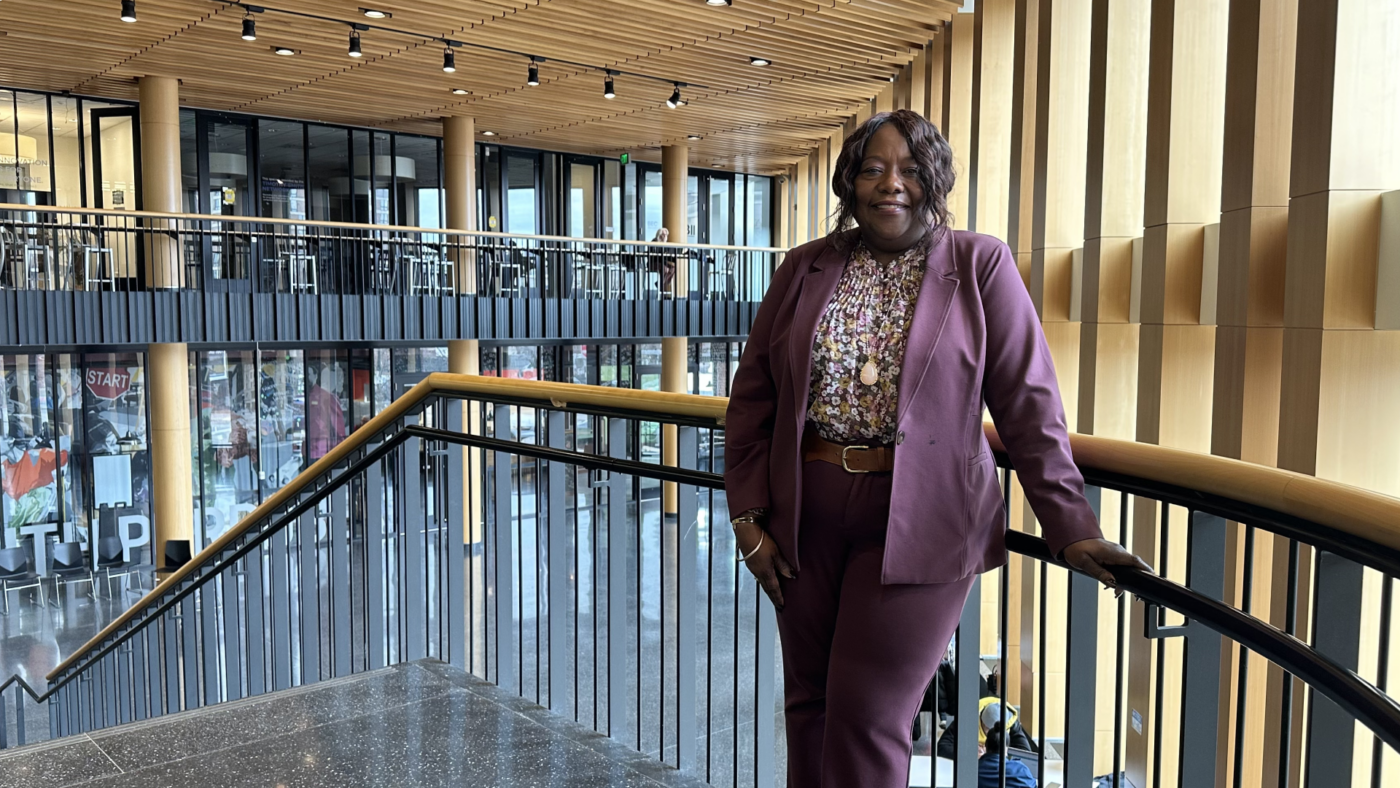

“We all have a story, and mine begins as a Black girl born in Barbados, West Indies.”
During Kay Seale’s journey in education, she faced both challenges and successes. She was six years old when her family relocated to the United States. “This experience was very emotional for me, as it is for so many children of immigrants,” Kay shared.
Kay’s introduction to education in the United States began in Boston Public Schools (BPS), which proved to be a formative experience. She had to navigate how to fit in. The struggle was real, and the sense-of-belonging process was difficult because she had to acclimate to a new culture during a very tumultuous time at school.
During her 6th and 7th grade school years, BPS was undergoing a court-ordered desegregation process through busing—a highly controversial and deeply divisive measure. Reflecting on that time, Kay described it as traumatic:
“I was a Black child living in Roxbury, an urban neighborhood, being bused to another community where I felt like an outsider: unwelcomed. There was a constant sense of fear, as the community we were bused into showed open hostility. They made it clear they believed minority students didn’t belong in their schools and should go back to where we came from.”
The little girl with pigtails, ribbons, and a Caribbean accent was not well received by her peers. She did not feel like she was part of the school community she was being bused to. “We were something that was done TO them,” Kay said.
Her parents placed their trust in the school district to make the best decisions for their children, yet they had no voice in where Kay attended school. At her new school, Kay immediately saw inequity, given that the academic expectations were far more rigorous, supported by advanced curriculum materials and teachers having more access to resources, which only widened the gap between students.
Although the desegregation of Boston Public Schools was a traumatic experience in Kay’s childhood, it left lasting lessons that shaped her journey as an educator and transformative leader. She has carried those memories into her work across three of the largest urban school districts in the Commonwealth of Massachusetts.
Now in her third year of tenure as Chief of Specialized Services at Boston Public Schools, Kay leads with the resilience forged by that experience. It instilled in her a deep commitment to center student voice and foster meaningful parent and student engagement. At the core of her leadership is a clear conviction: every child deserves to be valued, to feel safe, and to experience a true sense of belonging.
“If we truly, truly want to prepare them for the future, it’s important to take into consideration how children are part of our learning and part of the fabric of schools.”
“Sometimes our children have so many challenges and difficulties because they don’t have a sense of belonging to their school environment. They don’t feel as if they can thrive and learn. Their identity is questioned,” she said. “If we truly, truly want to prepare them for the future, it’s important to take into consideration how children are part of our learning and part of the fabric of schools.”
A Full Circle of Change
Kay always knew, deep down, that she wanted to be an educator. In her family, education wasn’t just encouraged, it was expected. That strong foundation led her to earn a degree from Boston University, followed by graduate studies at Lesley College.
She began her professional career at Boston Public Schools and spanned every level of education, from early childhood to elementary and secondary classrooms. Over time, her professional growth propelled her into a series of leadership roles, including Evaluation Team Chairperson, Special Education Department Head, and Program Advisor for Compliance at the district’s central office.
“I encourage new leaders to recognize the value of hands-on experience throughout their careers,” Kay said. “It’s essential to understand the work at every level so you can truly support the staff who are in the trenches. When you have taken the initiative and developed those foundational skills yourself, you earn credibility from having done the work firsthand.”
While serving as Program Advisor for Compliance, Kay worked alongside a team of administrators, educators, and specialists to prepare detailed reports on the state of BPS schools. These reports were presented during compliance meetings with none other than Judge W. Arthur Garrity—the same judge who had issued the court order mandating the desegregation of BPS through busing.
Kay described how the weight of this responsibility stirred intense emotions, resurfacing memories that had once left her feeling powerless: “At times, it was surreal and almost unimaginable to be sitting at the same table with the judge who had once ordered that I be bused to another school.
The opportunity not only validated a sense of urgency but also deepened Kay’s conviction and sense of purpose. The experience shaped the goals she would pursue for decades to come in the field of public service.
Ten years of working in BPS laid the foundation for her work in other urban districts across Massachusetts. She went on to serve in Brockton Public Schools for 15 years, where she was appointed Director of Special Education. In that role, she played a key part in developing a continuum of inclusive programs for students with disabilities.
Her next leadership role brought her to Worcester Public Schools, which is the second largest district in Massachusetts. During her tenure there, she continued her advocacy for equity in special education. Kay worked tirelessly to develop systems that prioritized least restrictive environments (LRE) and strategically allocated resources to meet the diverse needs of all students. She emphasized that family engagement remained her north star—ensuring families were both involved and supported in every step.
A pivotal moment in Kay’s career was being invited by her mentor, David Riley, founder of the Massachusetts Urban Collaborative, to co-facilitate a panel discussion. This national event featured Dr. Thomas Hehir, former Director of the Office of Special Education Programs at the U.S. Department of Education, and Marcia Mittnacht, Massachusetts State Director of Special Education. Alongside them, Kay co-led a powerful discussion titled “State of the Union Address on Special Education.”
This was a defining moment and a wonderful opportunity to share the breadth of her experience in a field she holds with deep passion. It also affirmed her voice and solidified her role as a respected leader and advocate in special education.
“I was blessed to achieve success in areas that truly mattered to me,” Kay reflected. “But as I looked ahead at my career and envisioned the next chapter, I knew there was still more I needed to accomplish for our students and their futures.”
So after ten years in Worcester, she made another career move.
Kay made a 360 and came back to where her education experience began as a young girl: Boston Public Schools. However, this time she was honored to be appointed to the position of Chief of Specialized Services. For her, returning to BPS is beyond just a homecoming; she shared, “it’s the best way to bring things into a full circle of change.”
The Moral Imperative to Create Opportunities for All
Since her return to BPS in August 2023, Kay has been deeply engaged in developing a more comprehensive understanding of the longstanding disparities and inequities within the district.
A 2022 in-depth analysis conducted by the Council of the Great City Schools of BPS revealed significant inequities in student outcomes across all racial groups within BPS, an alarming concern. Data also highlighted disproportionate placement in substantially separate classrooms of special education students, particularly Black, Brown, and Latinx males.
In response to these findings, BPS developed the Inclusive Education Plan, which is a strategic framework designed to create an inclusive, multicultural learning environment that emphasizes belonging and connection for all students over separation and exclusion.
The district is strategically advancing the Inclusive Education Plan through a cross-functional responsive teams framework, dedicated to breaking down barriers that hinder students from feeling a true sense of belonging. The work Kay leads is closely aligned with her personal mission and purpose, which she describes as her call to action and, most importantly, the inspiration behind her return to BPS.
“It is a moral imperative to create opportunities that provide access to all,” she said.
Leading Others By Serving Others
Kay has “street cred” because she grew up in BPS.
But her credibility goes far beyond her roots. She’s a seasoned expert and professional who has held multiple leadership roles in special education.
“When I make decisions,” she said, “I draw not only from my professional experience, but also from my battle scars because those experiences make me human.”
The memories of feeling like she didn’t belong in school now fuel the compassion and empathy she brings to her role, allowing her to better understand and support the families she serves today.
Kay is a servant-leader and makes herself accessible to her staff, the families, and the students. In practice, this means:
- Being visible and present in schools, not solely working in the central office building
- Developing relationships in the community and with special education organizations
- Building trust with families through clear communication
She is intentional about treating every member of her team with respect and integrity, whether they are administrative assistants, support staff, or professional staff. According to Kay, building staff capacity starts with inclusion: engaging people in open, meaningful dialogue, guiding them through processes, and ensuring there are no surprises or misunderstandings.
For Kay, leadership is about empowerment—not imposing decisions, but working collaboratively.
That philosophy is deeply personal, rooted in her own experience as a young girl who was bused to a school where she felt decisions were being made about her, not in her best interest. Today, she leads differently by making sure others feel seen and heard, with high expectations of accountability every step of the way.
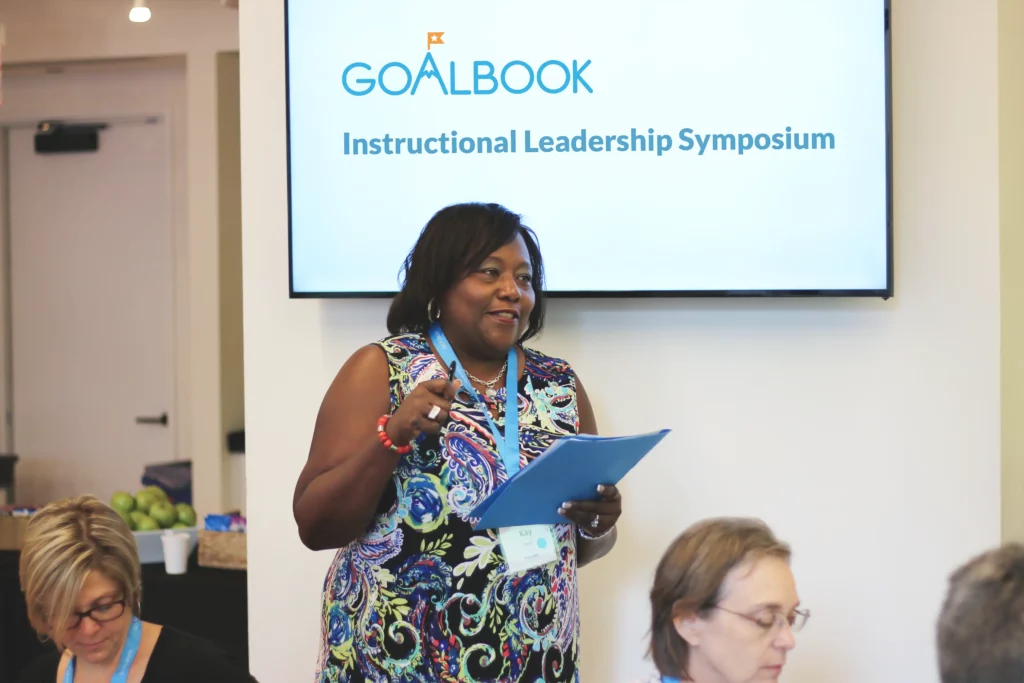
Kay is transparent in her decision-making and communication. She keeps her staff and colleagues informed through ongoing meeting structures such as tactical, strategic, and calibration. She also does this to give them a voice.
“Voice is so important to this work,” Kay said, “But so is setting boundaries, clear expectations, and communicating decision-making processes and the impacts decisions may have.”
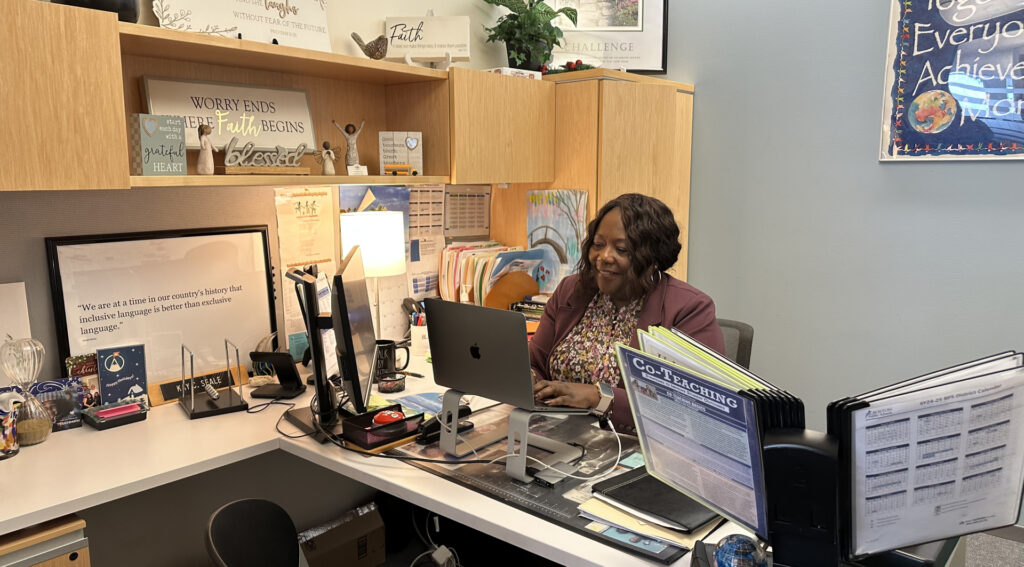
On the wall of her office hangs a framed poster she’s carried with her for nearly every role over the past 30+ years in the field. It reads: Together Everyone Achieves More.
“And that’s my mantra,” said Kay. “I try to be reflective and mindful of where I start, to be present for our families, and also to be aware of what I can do to make a difference in the lives of our students.”
Looking to the Future
According to Kay, special education leaders must be reflective and recognize that they don’t have all the answers. It’s crucial to surround themselves with colleagues who are equally committed to growing and learning together.
“When we stop learning as educators, we stop thriving—and ultimately, we stop making a meaningful difference,” explained Kay.
“We must all partner together to ensure that every student has the opportunity to become the best version of themselves—and that we provide them with the resources, the care, and the encouragement to embrace who they are.”
Special education leaders often juggle numerous responsibilities, particularly around compliance and accountability to both federal and state mandates.
In the midst of that pressure, Kay surrounds herself with positive affirmations that keep her grounded in purpose. One framed quote by Mahatma Gandhi, gifted by a staff member, holds special meaning and reflects her leadership philosophy: “A sign of a good leader is not how many followers you have, but how many leaders you create.” It’s a message that, for Kay, speaks volumes and perfectly captures the kind of leader she strives to be.
Kay’s driving purpose is clear: to ensure that all students have access to high-quality educational opportunities that empower them to become independent, lifelong learners with a strong civic awareness who actively contribute to their communities and society.
When asked about the future of education in the United States, Kay emphasized the critical need to focus on equity and outcomes for students with disabilities. “We must work strategically to accelerate learning opportunities and prioritize strong, individualized transition plans that open doors to a wide range of postsecondary pathways,” replied Kay.
At every stage, she added, it’s essential to amplify student voices and embrace the uniqueness of each learner.
“Our real work is to prepare students for the future by honoring who they are and ensuring they have every opportunity to thrive.”
Perhaps if more adults had welcomed Kay and helped her feel a true sense of belonging at school, she wouldn’t carry the battle scars from the trauma she endured.
Yet, her profound empathy for students and families comes not despite those scars, but grows because of them. Her perseverance is born from reflecting on those painful experiences, not only to make meaning of them, but to transform them into a powerful purpose that fuels her work today.