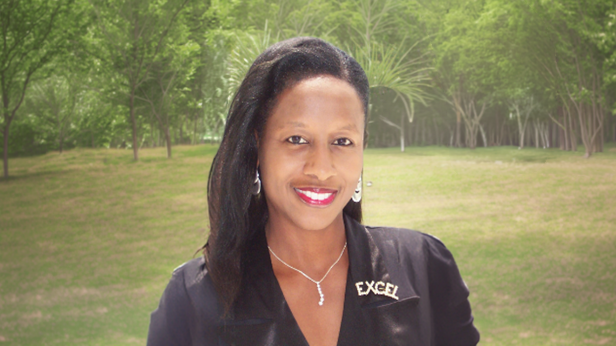

There is the saying that if you love what you do and do what you love, you’ll never work a day in your life. This has rung true for Dr. Rosalind Hall.
“I’ve never worked a day in my life,” she said. “And I’m waiting for the day to come when I feel like I’ve really worked a day in my life.”
In 2023, Rosalind technically retired from special education. However, she’s continued to consult, mentor educators, and contribute to state and national special education efforts. Recently, she also began working part-time at the University of Florida, which she enjoys immensely.
What has carried Rosalind through decades of work is a strong conviction that students with disabilities deserve full inclusion, services, resources, and opportunities provided to every student, plus the specialized support they need to thrive. She is unwavering in her belief that every student can succeed when given respect, held to high expectations, and receives proper support.
She first began realizing this belief during one fateful summer, when she was just 16 years old. After that summer, the trajectory of Dr. Rosalind Hall’s life and career changed. She spent the next 45 years dedicating her life and work to the field of special education.
That Fateful Summer
When Rosalind was in high school, she was dual-enrolled at Santa Fe College. She started her college education at the University of Florida, pursuing accounting or business management, but quickly realized her heart wasn’t in that work. Then, in the summer of her last semester of college, she had an opportunity to work in a class with a group of high school students.
The class was for special education students in a summer program. It was composed of eight or nine students, all male, and in 9th and 10th grade. The teacher warned Rosalind that the students “were challenging.” However, from her first day, she began building relationships with the students and even created some basic class rules with them.
The students previously had never had an opportunity to have input in a classroom, and by the fourth day, the students were attentive, staying in their seats, and doing the work. They felt like they had a voice and were recognized. The class became a collaborative effort.
All the students moved to the next grade level in the fall, and Rosalind experienced what it felt like to make a small difference in the lives of those young men. Her desire to make a positive impact in the lives of future generations began to grow, so she switched her career focus to special education.
Her First Teaching Role
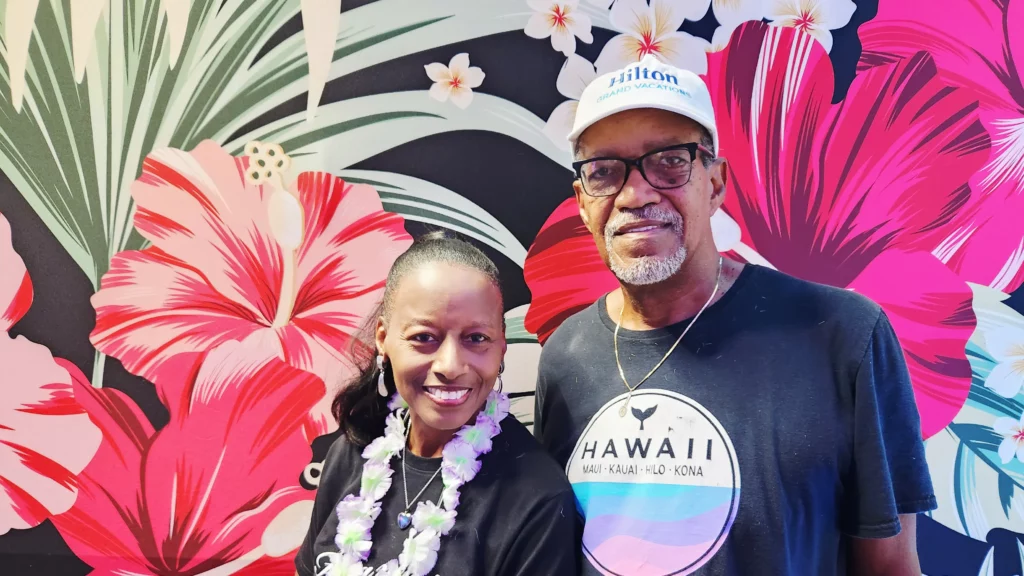
Rosalind began teaching when she was just 19 years old. Her first teaching assignment was multi-age high school classes, grades 9–12. Most of the students had mild to moderate disabilities, and there were a few students who needed some extensive support.
Some of her fellow educators were skeptical about whether this was the right role for Rosalind, as some of the students were 17 and 18, just a couple of years younger than she was.
However, Rosalind attributes her early career success to having a strong mentor who “showed her the ropes.” The school administrators also created a positive environment where she felt valued and supported. Oftentimes, the administrators would ask for her input in meetings, decision-making, and collaborating with families because she had focused on building collaborative relationships.
Establishing positive relationships with students and families was intentional and critical for Rosalind. She told the story of contacting the mom of one of her 9th-grade students in that first year of teaching.
“I told her I was calling to introduce myself and share some things with her about her child,” recalled Rosalind.
“He’s in trouble again, isn’t he?” the mom answered.
“No ma’am. I’m calling to tell you that he’s been on time and he’s doing his work,” Rosalind responded.
The mom was so convinced it was not her son that she had asked Rosalind to describe him and his clothes. When Rosalind told her he had even helped another student with an assignment, the mother began to cry. It was the first time she had ever received a positive call about her child.
This experience confirmed two of Rosalind’s core beliefs: people can perform at a higher level than we expect, and building strong relationships is critical.
Lessons Learned Through the Years
While Rosalind’s career eventually took her from the classroom to the district office, she never lost the perspective of that 19-year-old teacher. Her 23 years in leadership were guided by several non-negotiables that she believes every educator should carry.
Lesson 1: “Shame on us if we ever think we can put a lid on what kids can learn and know to do.”
For Rosalind, “putting a lid” on a student isn’t just about low academic expectations—it’s about limiting their right to belong and their future potential before they even have a chance to prove themselves. This lesson wasn’t just a mantra for Rosalind; it was a mandate for systemic change.
This conviction was forged during her time as a District ESE Transition Coordinator and Supervisor for the Alachua County School Board. Rosalind spent half her day in the classroom and the other half “pounding the pavement,” building relationships with local businesses to create on-the-job training and internships. She refused to settle for charity placements, instead seeking genuine roles where her students could contribute.
By refusing to put a lid on their career prospects, she changed the trajectories of students who had been told their only option was a sheltered environment. She saw firsthand that when you raise the ceiling, students don’t just reach for it—they break through it.
Upon stepping into her role as the Director of Exceptional Student Education and Student Services for the School Board of Levy County, Rosalind recognizes an opportunity to further lift the “lid” on student potential.
At a local elementary school, Rosalind visited a self-contained classroom where the students had limited interaction with the broader school community. They spent their day, including meal times and play, in a separate setting from their non-disabled peers. Because this was a centralized program, some students traveled far distances, missing out on the opportunity to attend school alongside their neighbors and friends.
“I was astonished,” Rosalind recalled. “They were in the classroom away from their peers.”
Drawing on the same passion that drove her to find jobs for her high schoolers in her previous years, Rosalind realized that by isolating these children, it could lead to lower academic expectations and limit their ability to develop social skills, as they have fewer opportunities to interact with peers.
She disagreed with the centralized program model. She met with the superintendent the very next day to present a prudent plan to return the students back to their home communities.
“I wanted these kids to be served where they lived,” Rosalind explains. “They needed to be interacting with their friends and peers and building relationships within their community.”
The transition wasn’t easy; it required an investment in professional development to equip general education and ESE teachers with the tools to support our students with a disability as well as involving parents in the planning process and school administrators.
But Rosalind remained unwavering, and she succeeded with the assistance of school and district personnel by removing the “lid” of the self-contained classroom; she ensured that a student’s disability did not limit their right to be part of a community.
Lesson 2: “Be visible. Be proactive.”
If Lesson 1 was about the vision of what special education should be, Lesson 2 was about the visibility required to make it happen. Rosalind understood early on that a Director of Special Education and Student Services cannot lead effectively from behind a district office desk.
For Rosalind, being visible meant more than just showing up for scheduled IEP meetings, parent meetings, and evaluations. It meant being a fixture on campuses: attending sporting events, being present for general education and students with disabilities, graduation and other ceremonies, and walking the halls when things were quiet, not just when there was a crisis. She believed that if the district leadership is invisible, the staff feels unsupported and the students feel forgotten.
Being proactive meant identifying a ripple before it became a wave; she wanted to hear the concerns of a parent or a teacher in the hallway long before those concerns turned into a formal grievance or a breakdown in trust.
This approach was validated when the district conducted surveys. The feedback from school sites was clear: they wanted to see their leaders. They wanted to know that the person making the big decisions understood the daily reality of the classroom.
“You have to be in the classrooms to know what the needs are,” Rosalind noted.
When she showed up at a campus event that wasn’t strictly for special education, she was sending a powerful message of unity: Special education students are general education students first. They are part of the whole school community, and therefore, the Special Education Director should be part of the whole school’s life.
This visibility built a bridge of trust that allowed her to implement inclusive shifts. Because the teachers knew her, they were more willing to follow her lead into new territory.
Lesson 3: “Foster collaboration through strong, positive relationships.”
Being visible on campus naturally led Rosalind to her next realization: the success of a student with a disability is not the sole responsibility of the special education department. It is a shared mission. However, she knew that collaboration is only as strong as the relationships behind it.
As Rosalind walked the halls and visited classrooms, she saw that the most successful students with disabilities were those whose teachers—both general and special education—worked as a unified team. To move the needle for students with disabilities, she had to build a bridge between special education and general education peers, as well as with the families they served.
Rosalind’s philosophy is built on a simple, legal, and moral truth: “Our students with disabilities are afforded all the services and support provided to every student on campus, plus more.”
She often reminded colleagues that a student’s “home” is the general education curriculum. The Individualized Education Program (IEP) is not a separate destination; it is the “plus more”—the specialized toolbox that allows them to thrive in that home. When general education and special education staff operate in silos, that “plus more” becomes a barrier rather than a bridge.
Rosalind believes that because you never know where a student’s journey will take them, every teacher on campus must feel empowered and responsible for every student’s success.
The results of this collaborative focus were staggering. Under Rosalind’s leadership and the support of the district leaders and school staff, the district saw a massive cultural and statistical shift: the number of students in inclusive environments more than doubled.
This didn’t happen by accident. It happened because Rosalind moved the conversation away from “my students” versus “your students” and toward “our students.” She facilitated professional development where general education teachers learned the nuances of the IEP, and special education teachers learned how to weave their supports into the standard curriculum with the assistance of Florida Diagnostic & Learning Resources System (FDLRS Springs) and other Florida Department of Education Discretionary Projects.
For Rosalind, a healthy relationship isn’t about constant agreement—it’s about honesty. She often told her team, “Surely someone has a different idea and perspective we may want to consider.”
By building trust with general education teachers and admitting when things were difficult, Rosalind created an environment where they felt supported in taking on new challenges. She proved that when the walls between departments come down—supported by a foundation of honest relationships—the “plus more” becomes a seamless part of a student’s success.
She led with the “good, the bad, the ugly, and the truth,” ensuring that stakeholders always knew where they stood. This transparency was vital because of her core belief: students with disabilities deserve everything a general education student receives, plus more.
Lesson 4: “Be knowledgeable about special education.”
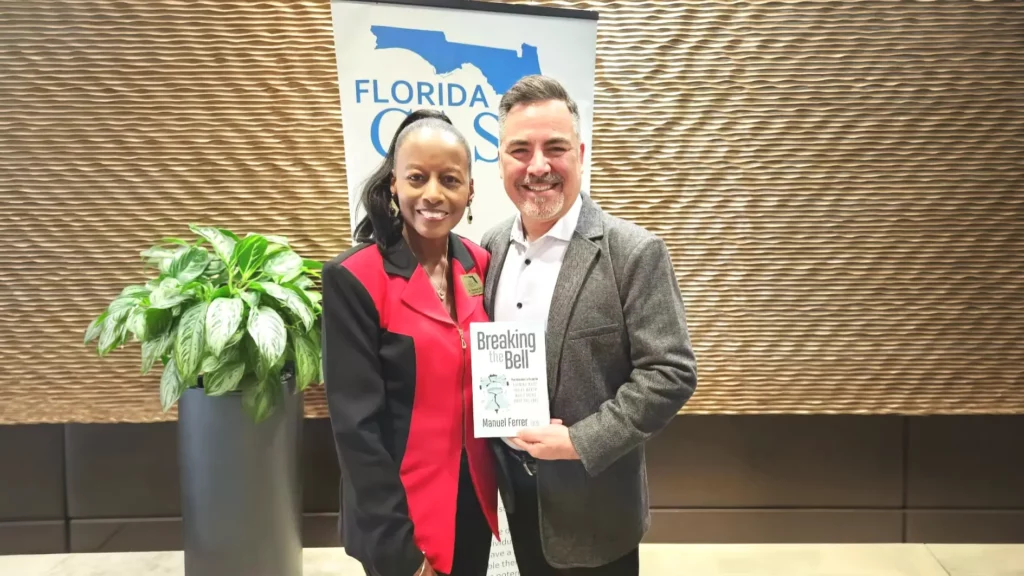
Rosalind often reminds her mentees that in the high-stakes world of special education, you simply cannot afford to wing it. To advocate for a child’s rights, you must first know exactly what those rights are.
“You don’t know what you don’t know,” said Rosalind. As a humble, servant leader, she believes there is no shame in not having an immediate answer, but there is a great deal of risk in making one up to avoid embarrassment. To her, being a professional means having the humility to say, “I’m not sure, let me get back to you,” and then possessing the work ethic to find the accurate answer.
Beyond the day-to-day, she views knowledge as a proactive pursuit. She tenaciously tracked state and federal legislation before it even became law, allowing her to prepare her staff and families for shifts in policy rather than just reacting to them after the fact.
This commitment to being an expert in the room earned Rosalind substantial respect from parents, school board members, and colleagues. When she proposed the shift to inclusive environments or fought for more resources, she was speaking from the heart and from a place of legal and pedagogical certainty.
Because she knew the nuances of the law, she could navigate complex IEP meetings with a level of authority that put parents at ease. Her knowledge ensured that the “plus more” she promised was not just a platitude, but a legally protected reality.
Hope for the Future of Special Education
Today, Rosalind’s career has come full circle. The young woman who began her college journey at Santa Fe College while in high school and then on to the University of Florida as a teenager now finds herself back at the university, working part-time as an Educational Consultant and Parent Liaison.
Though she technically retired in 2023, she has never truly stepped away. Between consulting, mentoring, and attending national conferences, she remains a steady force in the field she has called home for nearly half a century.
“My sense of purpose continues to drive my work daily,” she said. “As a long-time educator in the world of special education, I continue to practice the principles of being a servant leader with compassion and commitment to what is best for children and families.”
For Rosalind, the best is nothing less than total equality. Her hope for the future is to see a world where inclusiveness and diversity aren’t just goals, but the standard. She is candid about the work that remains, noting that improving outcomes for students with disabilities is not yet happening at the rate it should be. She insists that the focus must remain on the whole child—pairing academic rigor in reading and math with essential social, emotional, and behavioral support.
She is quick to point out, however, that these outcomes cannot be achieved through policy alone.
“A well-trained educator is the most powerful tool a student with a disability can have.”
“The key here is a trained and efficient staff,” Rosalind noted. She believes that to support student success, the system must prioritize the people in the trenches. To her, a well-trained educator is the most powerful tool a student with a disability can have—they are the ones who translate the “plus more” of an IEP into daily progress.
It is a tall order, but Rosalind remains an optimist, driven by the same heart that was first stirred in a summer classroom of eight “challenging” students decades ago.
“I am an advocate for students with disabilities and dedicated to improving their educational success, ensuring that they are provided the same opportunities as all students, becoming lifelong learners and responsible citizens,” Rosalind concluded.
Looking back at a career spanning over four decades, it is clear that Rosalind Hall never did find that “day of work” she was waiting for. Instead, she found a calling. And in doing so, she ensured that for thousands of students, the “lid” was lifted, the doors were opened, and the “plus more” was finally delivered.
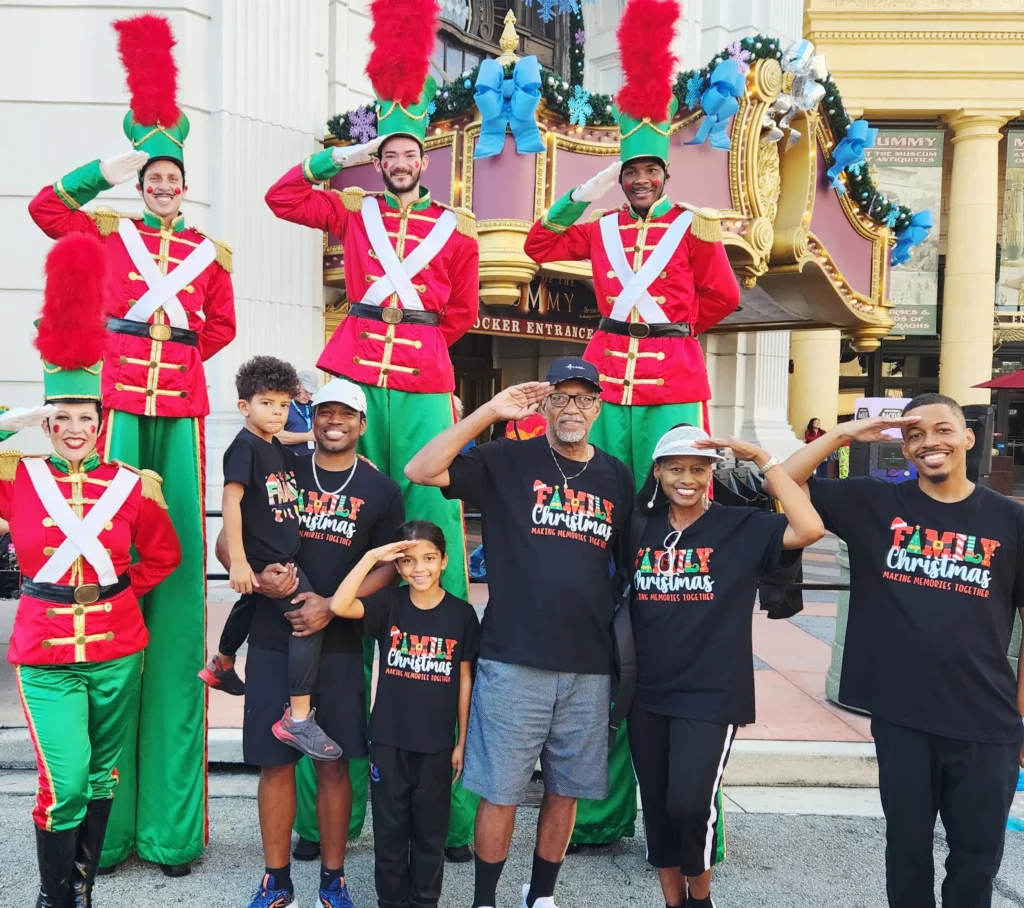
Dr. Rosalind Hall credits her family for their love and support in her work: “A special thank you and deepest gratitude to her supportive and loving mom, Elaine Batie; love to her husband Arnett Hall, who expresses love through both words and actions, encourages and supports her personal and career goals. Dr. Hall says being his wife is truly an honor. She sends love to her sons Arnett II and Alexian Hall; grandchildren, Ariana and Cameron Hall, for your joy, encouragement and bringing so much love into my life. I love you,” said Dr. Hall.
